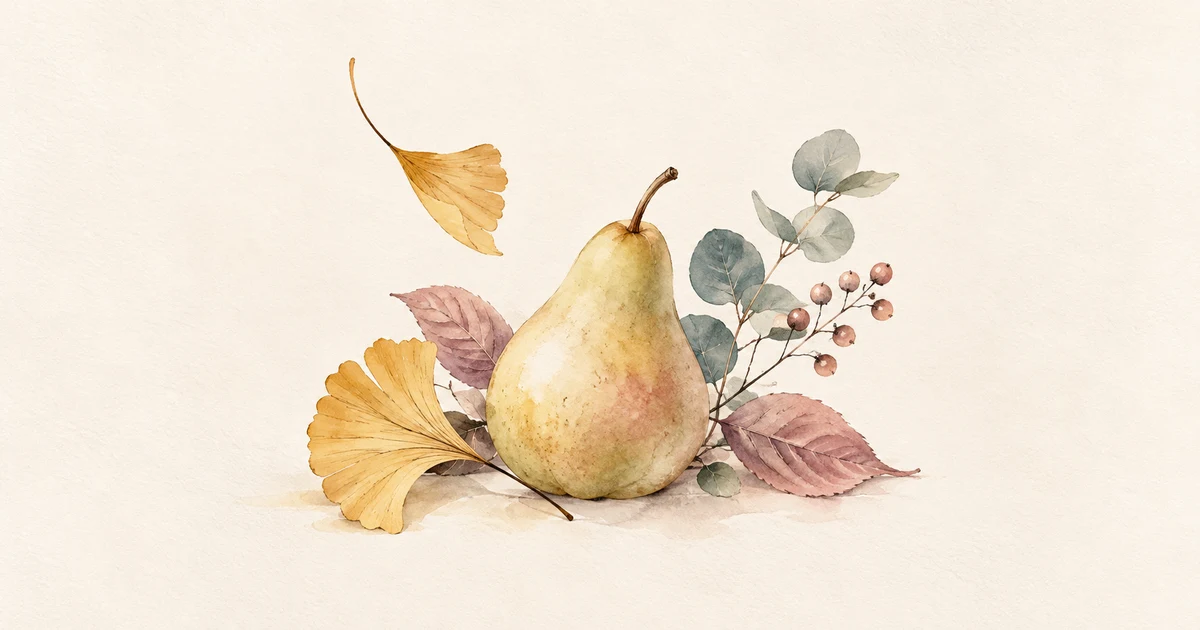
There is a particular week every October when it all seems to change at once. The mornings turn crisp, the light goes earlier, and suddenly half the people I see in clinic have a scratchy throat or the beginnings of a cold. Others tell me they feel quieter than usual – a bit tender, a bit reflective, or simply tired.
None of this is a coincidence in Chinese medicine. Autumn in Chinese medicine is the season of the Lungs, and it has a way of asking us to slow down, breathe a little more deeply, and let go of what we no longer need to carry.
In this guide I’ll explain what that means in plain English, and share some simple ways to look after yourself through the season – what to eat, a few acupressure points to try at home, and a short breathing exercise. I’ve also gathered it all into a free printable guide you can keep.
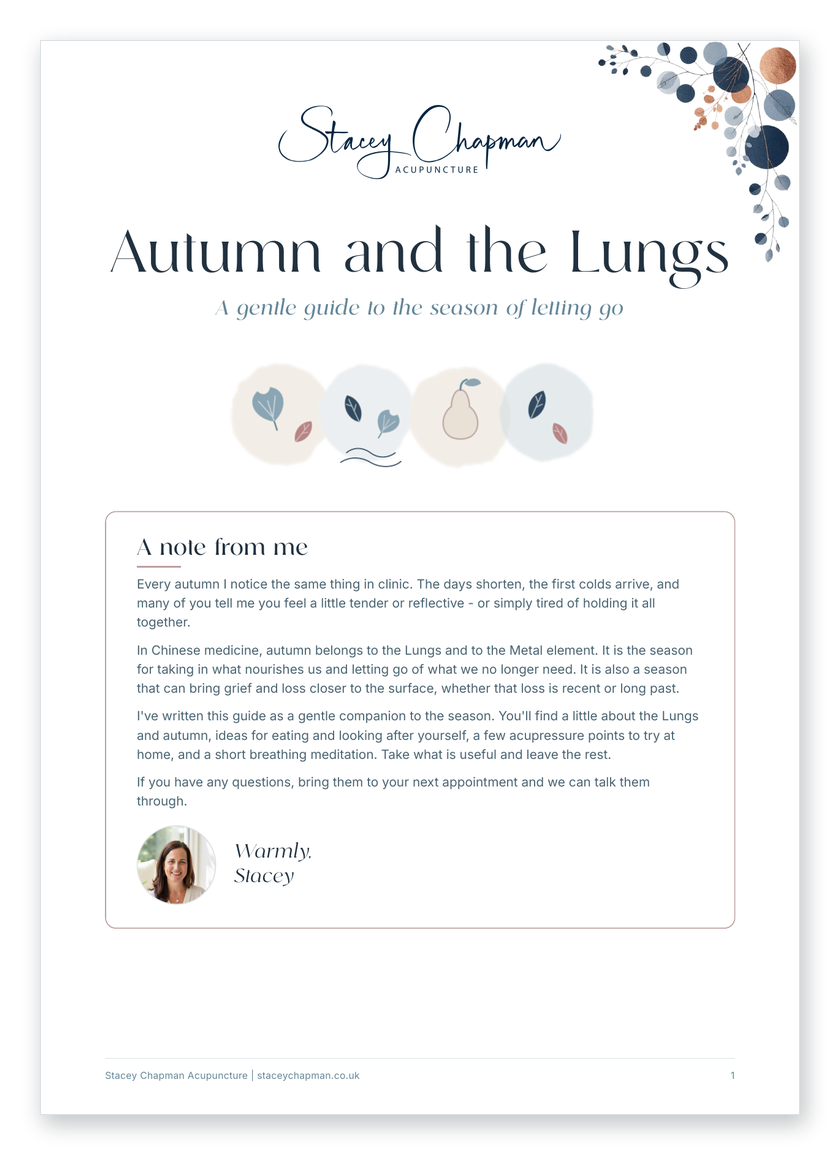
Free guide: Autumn and the Lungs
A gentle 11-page guide with seasonal foods, six acupressure points and a guided breathing meditation to follow at home.
Enter your email and I’ll send it straight to you.
Autumn in Chinese Medicine: The Season of Metal
Chinese medicine describes five elements – Wood, Fire, Earth, Metal and Water. Each one is linked with a season, and with particular organs in the body. Autumn belongs to Metal.
Think about what autumn feels like. The air turns crisp and dry. The leaves loosen and fall. The trees draw their energy back inwards, ready for rest. Metal carries those same qualities: clarity, simplicity, and the ability to let go of what has had its time.
It’s a useful way of thinking about the season, because it gives us a gentle prompt for how to live in it. Autumn is a time for taking in what nourishes us and releasing what no longer serves us – whether that’s a cluttered cupboard, a habit, or something heavier.
The Lungs in Chinese Medicine: Taking In and Letting Go
Metal is linked with two partner organs: the Lungs and the Large Intestine.
In Chinese medicine, the Lungs do more than breathe. They draw in qi (pronounced “chee”, the vital energy that powers the body) from the air and help spread it around us. They are also said to look after the skin and the body’s outer defences – which is why dry skin and the first colds so often arrive with the change of season.
The Large Intestine is the Lungs’ partner. Its job is to let go of what the body no longer needs. Together they describe a rhythm we all know well: taking in, and letting go.
A quick note: I use a capital “L” for the Lungs when I mean the Chinese medicine idea, which is a traditional way of describing patterns in the body rather than a description of the organs as they appear in a biology textbook.
Signs Your Lungs Might Need Some Care This Autumn
In Chinese medicine, these are some of the things that suggest the Lungs would welcome a little extra attention:
- Dry skin, lips, nose or throat
- A dry cough or a scratchy throat
- Catching colds more easily at the change of season
- Shallow breathing, or sighing a lot
- Tightness across the chest
- Constipation, or feeling “stuck”
- Feeling flat, withdrawn or a little low
These are common, and they often ease with gentle care. If you’re worried about any symptom, or it doesn’t settle, please speak to your GP – there’s more on that further down.
Autumn, Grief and Loss
In Chinese medicine, grief and sadness are linked with the Lungs. Many people recognise this from their own bodies. When we are grieving, the breath often becomes shallow, we sigh, the chest feels tight or heavy, and we may feel tired or catch every cold going.
The idea is that sorrow held for a long time can tighten the Lungs – and that the breath is one gentle way back towards some ease.
This is a way of describing experience, not a diagnosis. It doesn’t mean your grief is a problem to be fixed. Grief is a natural response to loss, and there is no right way to do it and no timetable. Autumn can bring it closer to the surface, whether that is the shortening days, an anniversary, or something you have carried for a long time.
If you’re grieving, a few small things may help: a few slow breaths out, letting tears come if they want to, keeping warm, keeping things simple, and staying a little connected – one message, one short walk. There is no need to “let go” of anything before you’re ready. In autumn, the trees only release their leaves when the time is right.
If it feels heavy, you don’t have to carry it alone. Please talk to your GP if it is affecting your sleep, your eating or your ability to get through the day. Cruse Bereavement Support has a helpline on 0808 808 1677, and Samaritans are there day and night on 116 123.
What to Eat in Autumn According to Chinese Medicine
In autumn, Chinese medicine suggests eating to moisten and to warm. That means soft, cooked, gently sweet foods that are kind to a body meeting drier air and cooler days. This isn’t a diet – think of it as leaning towards what comforts and nourishes you.
Foods that suit the season include:
- Pears and apples, stewed, baked or poached with a little cinnamon, to soothe a dry throat
- Root vegetables and squash, such as carrots, parsnips, sweet potato and pumpkin
- Soups, stews and congee (rice porridge), which are warm and easy to digest
- Pale foods such as cauliflower, white radish (mooli), leeks and white mushrooms, which the five element view links with Metal
- Nuts and seeds, such as almonds, walnuts and sesame
- Warming aromatics, such as fresh ginger, spring onion and garlic, in small amounts
Most people find it helpful to go a little easier on iced drinks, lots of cold raw food, and very dry or fried dishes at this time of year.
If you’re grieving, appetite can disappear or become unpredictable. Small, warm, simple meals often feel easiest – a bowl of porridge, soup, or a baked pear. It doesn’t need to be perfect. My free guide includes a gentle “when you’re grieving” food page, with two easy recipes for congee and baked cinnamon pears.
Three Acupressure Points to Try at Home for Autumn Colds
Acupressure uses the same points as acupuncture, but with fingertip pressure instead of needles. It’s a simple way to take a few quiet minutes for yourself. To be honest, the research on acupressure for colds is limited, so I’d think of it as gentle self-care rather than a treatment. Press firmly but comfortably – it should never hurt – and hold each point for 30 to 60 seconds while breathing slowly.
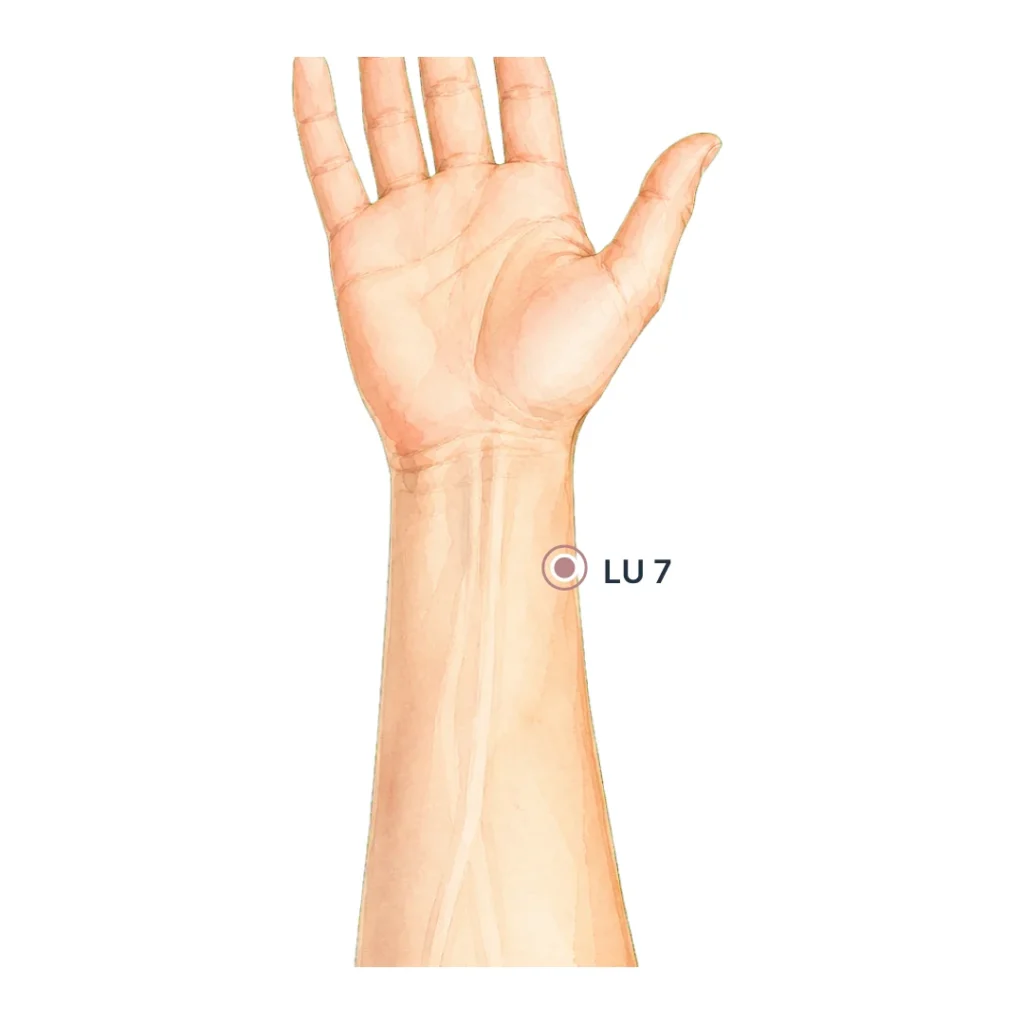
LU 7 (Lieque, “Broken Sequence”) – On the thumb side of your forearm, about two finger-widths above the wrist crease, in the groove beside the bone. Traditionally used for the first sniffles of a cold, and for tension in the neck and shoulders.
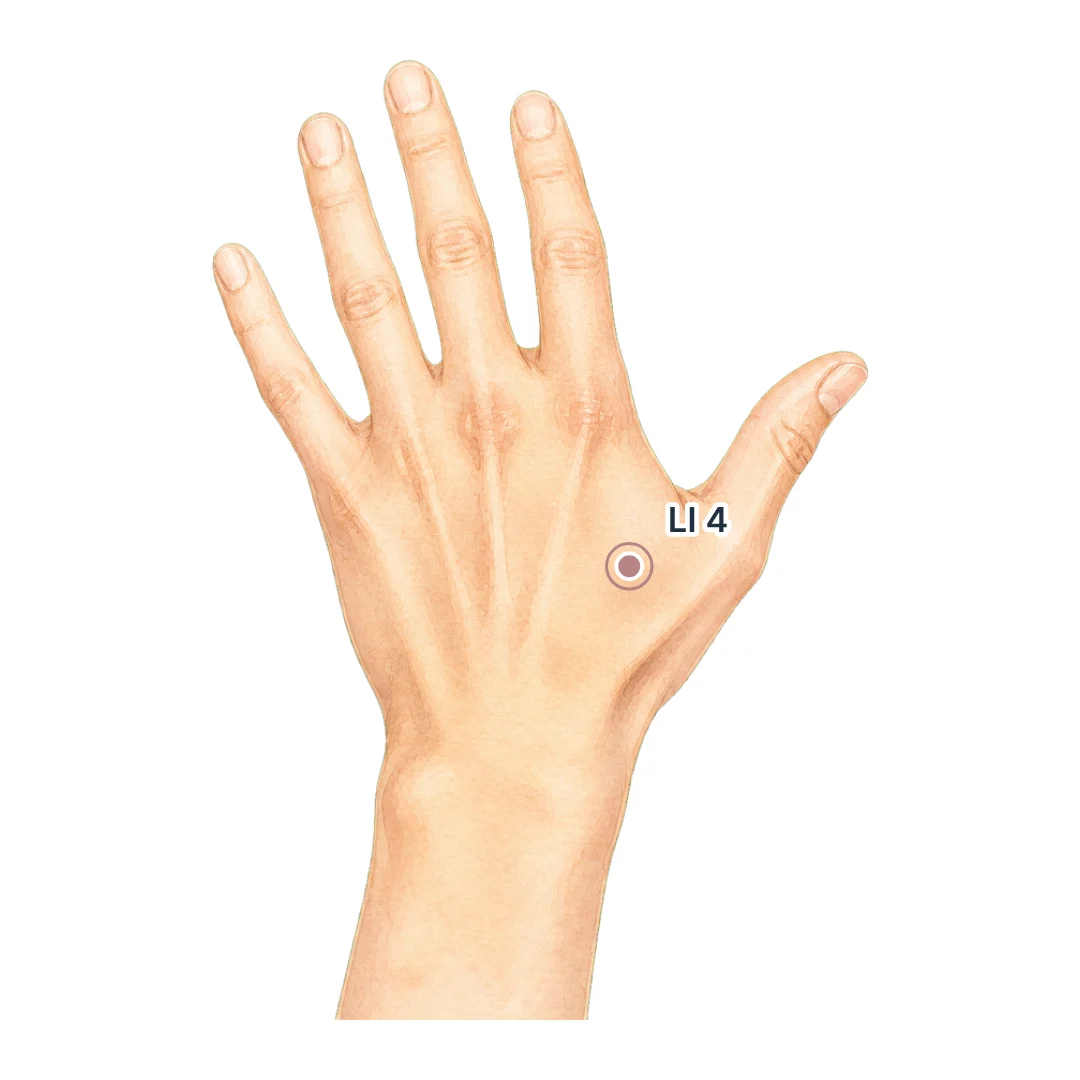
LI 4 (Hegu, “Joining Valley”) – On the back of your hand, in the web between your thumb and index finger. Press your thumb against your index finger and look for the highest point of the muscle bulge, then press into it. Traditionally used for colds, headaches, and tension in the face and shoulders. Please do not use this point if you are pregnant or might be, including during the two-week wait or after an embryo transfer.
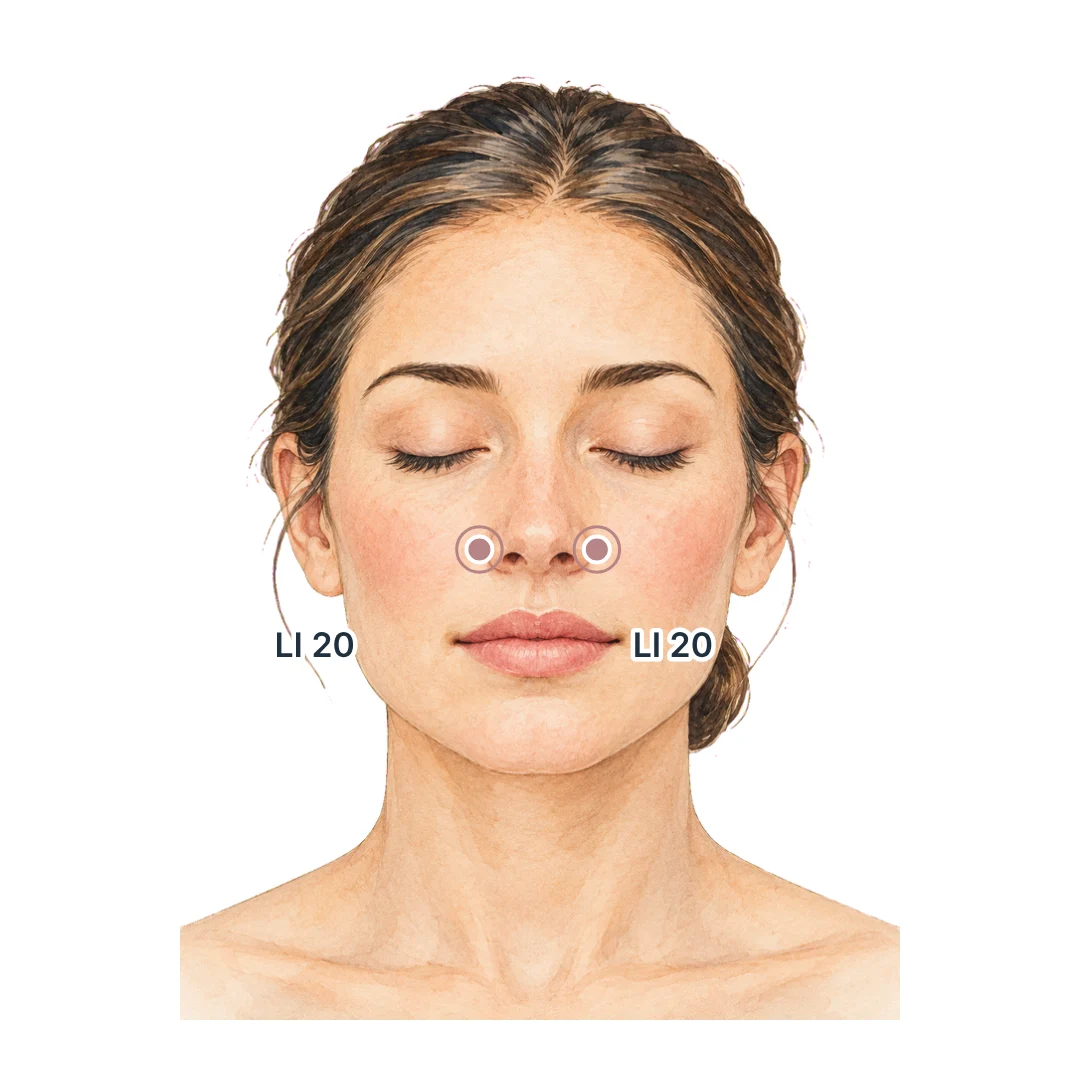
LI 20 (Yingxiang, “Welcome Fragrance”) – In the groove beside your nostrils, level with the middle of the outer edge of each nostril. Press gently with clean fingertips on both sides at once. Traditionally used for a blocked or runny nose. Skip it if the skin there is sore, broken or has a cold sore.
Avoid any area of broken or inflamed skin, bruising, or an injured joint, and use a lighter touch if a point feels sore. My free guide has all six points for the Lungs, with illustrations and a five-minute routine.
A One-Minute Breathing Exercise
You can do this anywhere, sitting or lying down:
- Let your shoulders drop and your jaw soften.
- Breathe in gently through your nose for a count of four.
- Breathe out slowly through your mouth for a count of six.
- Repeat for a minute or so, letting the out-breath be a little longer than the in-breath.
A longer out-breath is a simple way to help your body shift out of fight-or-flight and into rest-and-digest. The free guide includes a full ten-minute guided meditation on the theme of breathing in what nourishes and letting go of what you’re ready to release.
When to See Your GP
Self-care and acupressure can support you, but they never replace medical care. The NHS advises seeing a GP if you have a cough that has lasted more than three weeks, unexplained weight loss, or a weakened immune system. Seek urgent help if you have chest pain, difficulty breathing, or you’re coughing up blood, or if your cough is severe or getting rapidly worse.
If low mood tends to creep in as the days shorten, it’s also worth knowing about seasonal affective disorder. The NHS advises seeing a GP if you suspect you have it.
How Acupuncture Can Support You Through the Season
Acupuncture is not a cure for colds, and I wouldn’t describe it as a way to prevent them. What I see in clinic is that many people use the change of season as a moment to look after themselves more deliberately – and acupuncture can be a part of that. Treatment may help you feel calmer, rest more easily, and ease tension in the neck, shoulders and chest. It is also a place to rest, and a place to talk if you want to – but you don’t have to talk.
At Stacey Chapman Acupuncture, I offer specialist women’s health acupuncture in Palmers Green / Southgate, North London. Treatment combines acupuncture and massage, with a calm, individual approach. If you’re dealing with stress, poor sleep or pain, you can read more about acupuncture for sleep, stress and pain. If you’re going through the menopause or trying to conceive, you can find out about acupuncture for menopause and fertility acupuncture.
You’re welcome to book an appointment, or arrange a free 15-minute call first if you’d like to talk through whether acupuncture feels like the right next step for you.
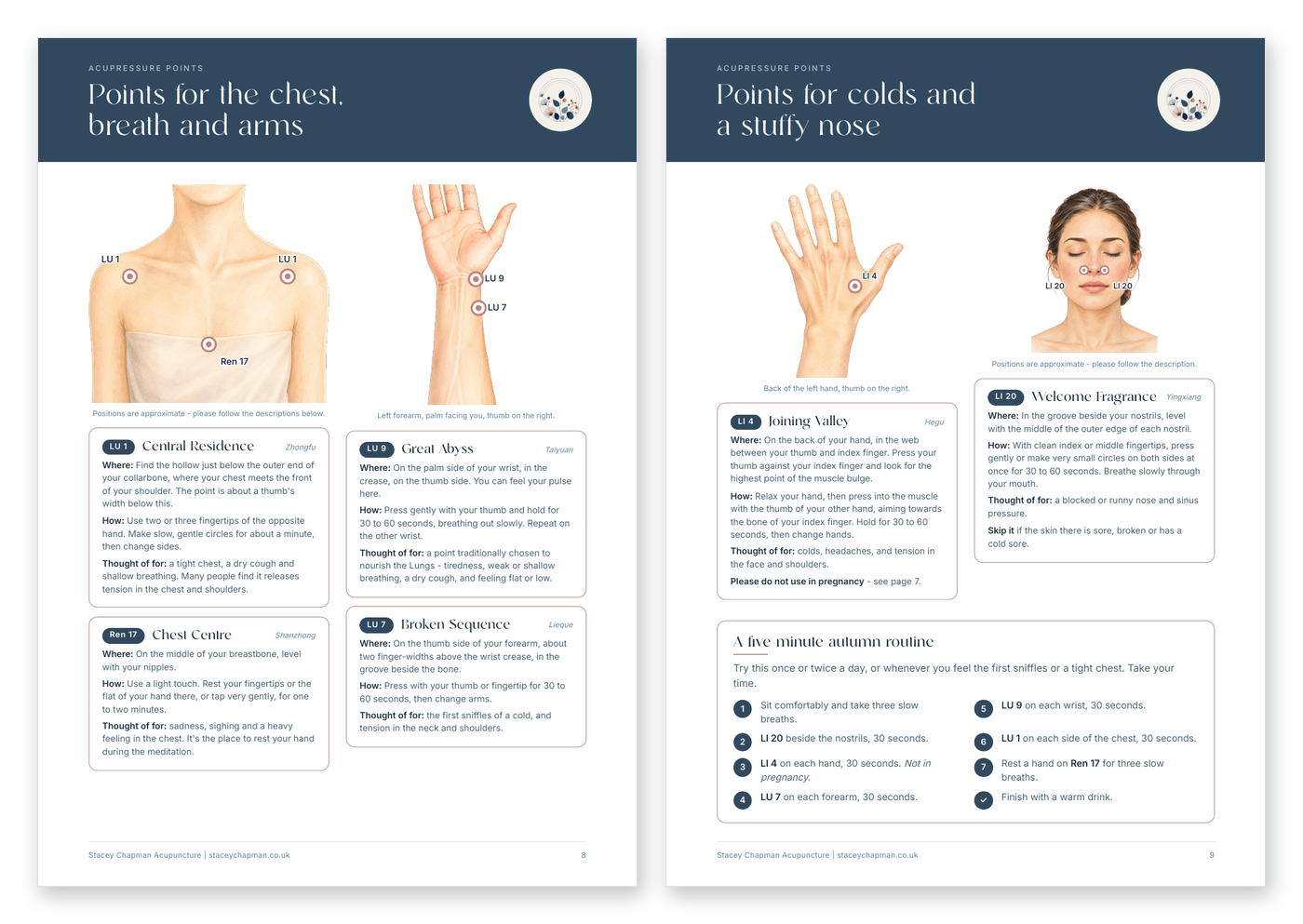
Free guide: Autumn and the Lungs
Seasonal foods, six acupressure points and a guided breathing meditation – all in one gentle, printable guide.
Enter your email and I’ll send it straight to you.
You’ll receive the guide and occasional emails from me. You can unsubscribe at any time. See my privacy policy.
Frequently Asked Questions
What organ is linked with autumn in Chinese medicine?
Autumn is linked with the Lungs and the Large Intestine, and with the Metal element. In Chinese medicine, this pair of organs is associated with taking in and letting go – breathing in, and releasing what the body no longer needs.
What foods are good for the Lungs in autumn according to Chinese medicine?
Chinese medicine suggests moistening and warming foods in autumn. Examples include pears and apples (stewed or baked), root vegetables, squash, soups, congee, nuts and seeds, and small amounts of ginger, spring onion and garlic. Many people find it helpful to go easier on iced drinks and lots of cold, raw food.
Why does autumn make some people feel sad or reflective?
There are several reasons. Shorter days and less daylight can affect how we feel, and for some people this can develop into seasonal affective disorder, so it is worth speaking to your GP if low mood persists. In Chinese medicine, grief and sadness are also linked with the Lungs, and autumn is their season – so feeling more tender or reflective at this time of year is seen as understandable rather than something to fix.
Can acupuncture help prevent colds?
There isn’t strong evidence that acupuncture prevents colds, so I wouldn’t promise that. Many people do find that regular acupuncture helps them feel calmer, sleep better and manage stress, which can be supportive when you’re feeling run down. It works best alongside the basics: rest, warmth, good food and medical care when you need it.
Is it safe to use acupressure at home?
Acupressure is generally gentle when done with comfortable pressure. Avoid broken or inflamed skin, bruising and sore or injured joints, and never press hard enough to cause pain. Please do not use LI 4 if you are pregnant or might be, including during the two-week wait or after an embryo transfer. If you have a medical condition or you’re unsure, ask your GP or acupuncturist first.
About the Author
I’m Stacey Chapman (BSc Hons Lic.Ac, MBAcC), a member of the British Acupuncture Council. I run an acupuncture clinic in Palmers Green / Southgate, North London, specialising in fertility and women’s health. I combine acupuncture and massage in every treatment, and I like to help my patients understand what is happening in their bodies, as well as feel better.